

Donald Trump and California PUC agree: The rule of law is for chumps
“Because I said so” is not how the law works.
Today, the California Public Utilities Commission (CPUC) issued an extraordinary decision that guts protections for consumers in San Diego Gas & Electric (SDG&E) territory, taking away their ability to access real-time power usage information – a key tool to manage monthly utility bills. CPUC’s abrupt rejection of the law and complete disregard for longstanding precedent shows an unmistakable similarity to Donald Trump: governance through power grabs, the rule of law be damned.
Today’s order from CPUC effectively deactivates the real-time data sharing functionality of SDG&E’s 1.5 million electric meters. Real-time usage data was a key feature of smart meters, a $5 billion investment, paid for by rate-payers, across the state of California. By getting real-time usage data to your smartphone or home energy management system, consumers and their appliances can respond – often automatically – to spikes in usage that occur during high-cost times. Since most people have no idea how many watts each device or appliance in their home uses, getting this real-time usage information is the only way to cost-effectively understand, and react to, the usage of your entire home.
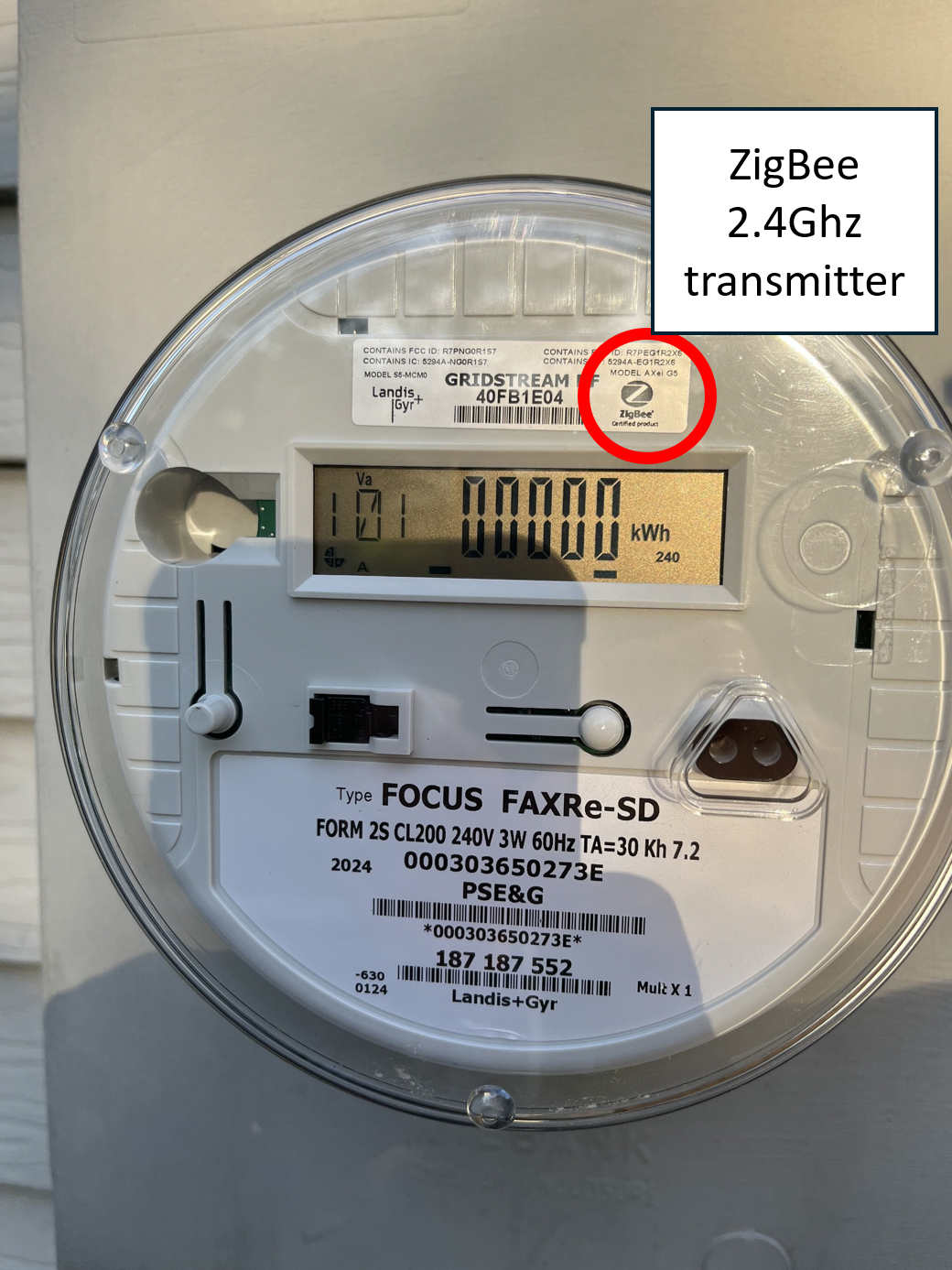
Smart meter with Zigbee. This picture is from PSE&G (New Jersey), but SDG&E’s are the same.
Four Commissioners, appointed by Governor Gavin Newsom, voted in favor to allow SDG&E to disable the “home area network” (HAN) radio transmitter inside the meter, which uses a wireless protocol known as Zigbee. The cost to continue this real-time service for customers was only $30,000 for all of SDG&E, or about $0.02 per customer. The insignificance of the costs involved makes CPUC’s decision to disobey the law, and violate their professed adherence to due process, all the more perplexing.
In 2009, 2010 and 2012, CPUC forcefully required real-time usage data services for customers. Those prior orders – which are still good law today – specifically state that approval of SDG&E’s smart meters, a $652 million investment, was “predicated” on real-time usage monitoring in order to “drive demand reduction via energy conservation, demand response and automated load control capabilities.”
But today’s decision makes a mockery of public utility regulation, justifying itself with sentences like “The decision does not overturn any previous Commission decisions related to data access.” Taken right out of the Trump administration's playbook, the CPUC is comfortably making false statements to get around statutes it doesn’t like.
I have seen the benefits of real-time energy insights first-hand. In my prior job in 2012-2013, I personally installed several HAN devices for the Santee School District, outside of San Diego, in order to help the schools manage their utility bills. For about $99, a HAN device allowed us to put real-time usage information onto a website called Building Dashboard. The website showed elementary school students, teachers and facility managers how to reduce their bills. Students would learn about electricity by turning lights and appliances on and off, and instantly see the value of the change on the Building Dashboard. It was experiential learning at its best – a cool learning opportunity for kids, but it was also an important skill for adult ratepayers in California, who now face electricity costs four times the national average.
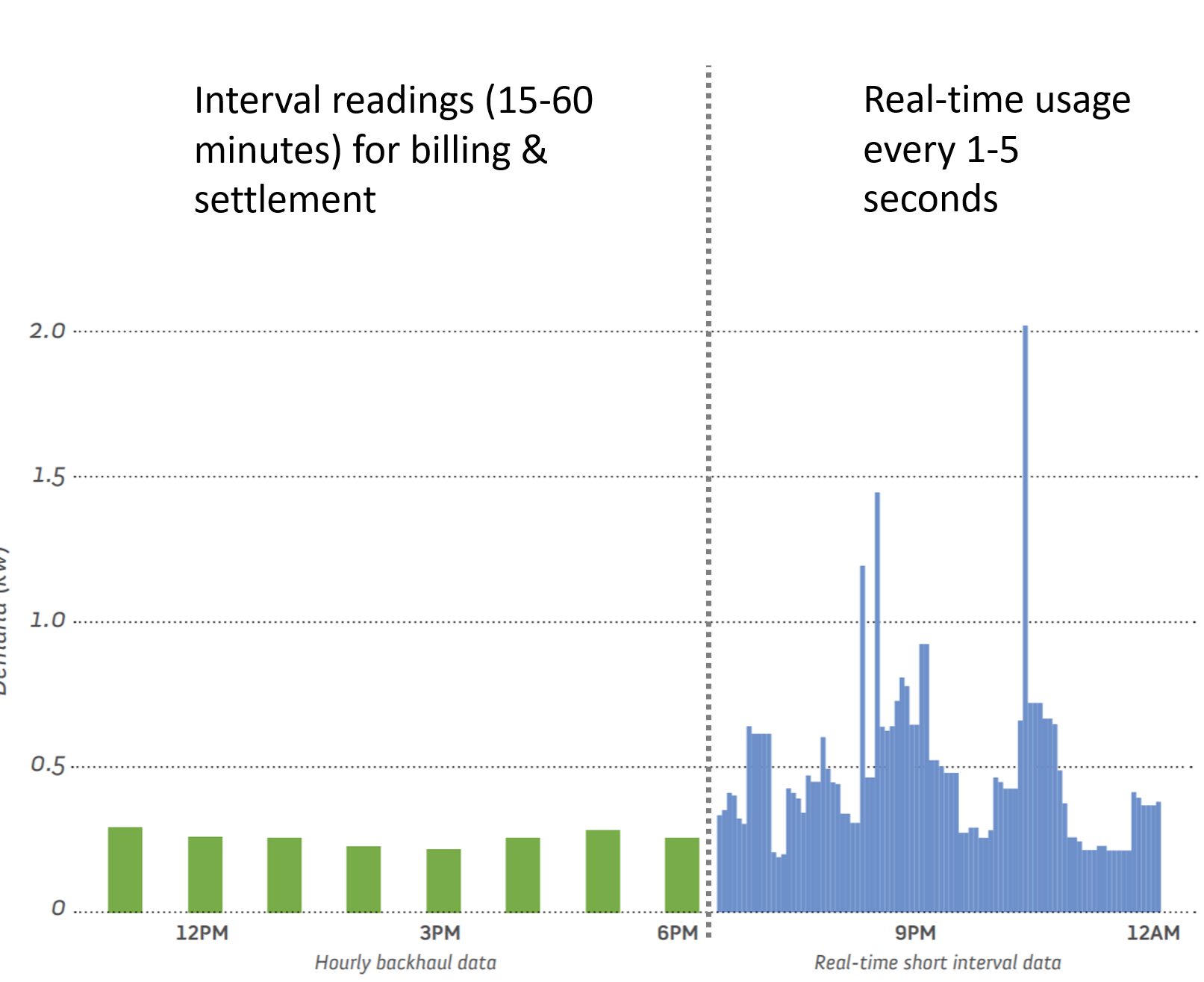
Left: Meter readings you’ll see on the utility’s website. Right: Real-time usage, now deactivated in San Diego.
If regulators don’t require the utility to keep Zigbee active, the only alternative to a $99 HAN device is to install your own metering equipment and provide an additional device to get the data streaming to the internet. For many commercial buildings, that’s $2,900 to $6,400 in equipment and labor. So on one hand, you can pay $0.02 through rates and $99 to make use of this information through your smart meter, or you can shell out thousands for your own custom setup to enable you to share your data - a totally unnecessary and duplicative effort. Today’s CPUC decision forces you to do the latter.
But that’s not all. With today’s decision, CPUC has completely disregarded statute, creating for itself an unnecessary legal and Constitutional problem. Under the Public Utilities Code, the agency cannot “rescind, alter, or amend” any prior decision without “providing notice to the parties and an opportunity to be heard.” CPUC has done no such thing. None of the parties to the previous decisions of 2009, 2011 and 2012 have heard a peep from CPUC, nor were they given a chance to respond to a decision that directly affects them. In fact, such decisions are not even acknowledged in the 2022 budget decision that abruptly terminated this bedrock customer protection. Today’s order thus results in an impermissible collateral attack on prior decisions, a violation of §1708 and the Constitution’s due process guarantees.
In legal parlance, the principle at stake is known as res judicata, which is Latin for “a matter judged.” Res judicata is the idea that there must be finality to court decisions (or decisions from administrative agencies, like CPUC). If you commit a crime and a jury finds you not guilty, res judicata is what prevents you from being indicted again for the same crime. Similarly, if your neighbor sues you for the nuisance of playing loud music, and a judge or jury finds you not liable, then res judicata prevents your neighbor from making your life a living hell by repeatedly taking you to court for the same nuisance ad infinitum.
But one might ask – highfalutin Latin aside – what if CPUC wants to change its policy on this or that topic? Why should the Public Utilities Code erect barriers to CPUC modifying its prior decisions? In other words, why is Mission:data upset about a breach of some unimportant-seeming notice-and-paperwork requirement? Wouldn’t government work better if it could, you know, change policies more easily?
Well, call me old-fashioned, but I think laws are supposed to mean something. No agency or branch of government, contrary to what Stephen Miller or California Commissioners may think, has plenary authority. The Code states that alterations of prior orders should be “extraordinary remedies” – in order to protect the principle of res judicata. The law doesn’t demand notice and comment periods at the CPUC because of a love of paperwork, or some pedantic devotion at the altar of liberal proceduralism. No, the Code prohibits collateral attacks because permitting them would be a descent into total chaos. If CPUC orders could be abruptly reversed without any due process, then regulations have no permanence; every CPUC decision can be re-litigated at any time, forever. The law becomes meaningless because the only binding edict is the last sentence out of the CPUC’s mouth. This is governance by stern paternalism – “because I said so” – not the administration of a republic.
In addition to §1708 violations, today’s decision is made even more outrageous and arbitrary by excusing lies in sworn testimony from regulated utilities. SDG&E testified that, for the 7,000 or so customers currently using Zigbee, their Zigbee devices would continue to remain connected until their meter was replaced with a Wi-Fi-capable meter. The truth is that SDG&E has been prematurely disconnecting some of those existing 7,000 customers’ Zigbee devices, as we demonstrated in our affidavit. So, not only is today’s decision illegal, but even if its due process flaws were by some alchemy corrected, the decision excuses false statements made by regulated utilities. This appalling precedent is – and this is a technical, legal term – utter bullshit.
Finally, let me reiterate what this dispute is not about. It is not about whether Zigbee is a good technology choice or whether other communication protocols would be superior to Zigbee. No doubt another wireless standard would be superior – namely, Wi-Fi, specifically 802.11ac and IEEE 2030.5. No, the heart of the matter is that the CPUC does not have the authority to issue today’s decision because it violates fundamental administrative law. If CPUC wants to change direction on Zigbee or real-time usage data generally, it is free to do so. But it must follow the law in the process – i.e., by providing notice to parties, soliciting comments, and writing a new decision with an evidentiary basis.
The CPUC has all the trappings of a deliberative agency: administrative law judges, formal hearings with cross examination, and a 110-page rulebook of practices and procedures. But the truth is that today’s decision is an egregious example of the agency arbitrarily exercising power when it wants to, untethered from law.
-Michael Murray